
Pet Grooming Franchise in India: The 2026 Owner's Guide
A practical guide to pet grooming and pet store franchises in India: cost components, licensing, location, operations, risks, and the questions to ask before you sign.
In this guide
- What this guide covers
- Grooming vs retail: two businesses under one pet franchise
- Pet franchise models in India: FOFO, FOCO and master franchise
- How much does a pet grooming franchise cost in India?
- Why published investment figures are not comparable
- What the Indian market data does and does not tell you
- How to choose a location for a pet grooming franchise
- Store size and layout for a pet grooming franchise
- Licences and registrations for a pet grooming franchise in India
- Staffing and training for a pet grooming franchise
- Operating metrics for a pet grooming franchise
- Risks of a pet grooming franchise and how to reduce them
- How to judge a pet franchise partner
- Questions to ask a franchisor before you sign
- Due diligence and a 90-day evaluation plan
- Is a pet franchise right for you?
- The Pawmiable franchise model
- Frequently asked questions
- Sources and further reading
- Related guides

A pet grooming franchise in India is a branded grooming studio, often with a retail shelf, that you own and operate under a franchisor's standards. Publicly quoted starting costs range from about ₹8 lakh for a small service-led format to ₹50 lakh or more for a premium store. That gap reflects store size, city, fit-out, equipment, opening stock, lease deposit and working capital. The franchise fee is only one line in the budget.
What this guide covers
This guide is for people comparing pet grooming, pet store and pet care franchise opportunities in India. It covers the models, the full cost stack, what the market data says, how to choose a location, what a store needs, the licences to check, the operating numbers to watch, the risks, and the questions to ask before you sign. It also explains how to judge a franchise partner and how Pawmiable approaches the model.
We wrote it from the operator's side of the table. Pawmiable runs a franchise model, so we have a commercial interest. The buyer's checklist comes first, and the Pawmiable model is set out in full near the end. We do not promise returns.
Grooming vs retail: two businesses under one pet franchise
Most franchise listings blur two different businesses into one phrase. Grooming sells time and skill. Retail sells inventory and shelf space. They behave differently across almost every line of the profit and loss statement.
Two businesses under one roof
| Grooming | Retail | |
|---|---|---|
| What the customer buys | An appointment and a result | A product they can carry home |
| Revenue trigger | Bookings, rebookings, seasonality | Footfall, assortment, basket size |
| Gross margin | High, because the main input is trained time | Lower and variable, because stock has a cost |
| Working capital | Low, apart from equipment and deposits | Higher, because inventory sits on the shelf |
| Main risk | Staff turnover, no-shows, injury claims | Slow movers, expiry, shrinkage, markdowns |
| Scaling constraint | Trained groomers and appointment slots | Cash, storage and supplier terms |
| Leading indicator | Rebooking rate and slot utilisation | Inventory turns and sell-through |
A grooming-led store uses retail to raise the value of a visit that already exists. A retail-led store uses grooming to create footfall. Both models work. They need different staffing, different cash buffers and different store layouts. Ask a franchisor which business their unit economics depend on.
Pet franchise models in India: FOFO, FOCO and master franchise
Franchise is an umbrella term. Each model gives you a different level of control, risk and capital exposure.
Franchise formats compared
| Model | Who operates the store | What you pay for | Watch out for |
|---|---|---|---|
| FOFO (franchise-owned, franchise-operated) | You own and run the store | Brand, standards, training, supply and support | You carry the lease, staffing and working capital |
| FOCO (franchise-owned, company-operated) | The franchisor runs the store; you own the asset | The asset and the brand terms | You may have little control over daily operations |
| Master franchise | You recruit and support sub-franchisees in a territory | Territory rights and the right to sub-franchise | It is a different business with its own team and legal exposure |
| Mobile grooming | You run a van-based service | Brand, route model, equipment and training | Vehicle cost, route density and weather |
| Shop-in-shop or concession | You run a counter inside another business | Brand and fit-out rights | Footfall depends on the host; opening hours are shared |
| Distribution or dealership | You sell products to retailers or consumers | Stock and territory | It is not a grooming store; margin comes from volume |
Read the agreement, not the brochure. A model called a franchise can be a licence, a distributorship or a management contract. Territory, pricing, minimum purchases, renewal and exit sit in the signed documents. If a franchisor will not send the draft before you pay, treat that as a finding.
How much does a pet grooming franchise cost in India?
Publicly quoted entry costs for pet grooming and pet store franchises in India commonly fall between about ₹8 lakh and ₹50 lakh or more. A small service-led format sits at the lower end. A premium store with full fit-out, equipment, opening stock, lease deposit and working capital sits at the upper end. Treat any published figure as a starting point, not a full budget.
The number that matters is the total funding requirement. Build it line by line.
The full cost stack
| Cost line | What it can include | What to confirm in writing |
|---|---|---|
| Franchise fee | Brand licence, onboarding, initial training, territory rights | Is it refundable? What happens on termination? Is GST extra? |
| Design and fit-out | Drawings, civil work, electrical, plumbing, furniture, signage, air conditioning | Who contracts the work? Is the bill of quantities itemised? Who owns the drawings? |
| Grooming equipment | Tables, tubs, dryers, clippers, blades, scissors, shampoos, towels | Are consumables included? What is the replacement cycle? |
| Opening inventory | Food, treats, toys, accessories, grooming retail | Who chooses the assortment? Can you return slow movers? |
| Lease deposit and advance | Security deposit, advance rent, brokerage, CAM deposit | What is refundable? What are the escalation and lock-in terms? |
| Working capital | Salaries, rent, utilities, marketing, stock replenishment | How many months does the franchisor assume? What is your buffer? |
| Staffing and training | Recruitment, salaries, training, uniforms | Who trains? Is training inside the fee? What is the refresher plan? |
| Launch marketing | Signage, opening event, local ads, photography, listings | Is there a marketing fund? Who controls the spend? |
| Technology and admin | POS, booking, CRM, accounting, insurance, legal | Are licences and implementation included? What are the recurring fees? |
Add a contingency you can defend. Ten percent is a common starting point for fit-out overruns, but the condition of the property should drive the number. Weak drainage, old wiring or a signage permission problem can absorb far more than a new coat of paint.
Pawmiable does not publish a fee on its website. The current franchise fee, applicable taxes and the site-specific funding requirement sit in the franchise information memorandum. A number without the site, the scope and the approved documents is not a budget.
Why published investment figures are not comparable
Two franchisors can advertise the same investment and mean different things. One quote may include the franchise fee, fit-out, equipment and opening stock. Another may include only the fee and a design package. Normalise the numbers before you compare.
- Ask whether GST is included in every line.
- Ask whether the lease deposit and advance rent are inside the figure.
- Ask whether opening inventory is included, and at retail or cost value.
- Ask how many months of working capital are assumed.
- Ask whether training, travel and pre-opening salaries are included.
- Ask when royalty or marketing contributions start.
- Ask whether the franchisor earns a margin on fit-out, equipment or supply.
- Ask for the same budget in writing, with assumptions and exclusions.
What the Indian market data does and does not tell you
Grand View Research estimates India's pet grooming services market at USD 246.9 million in 2024, rising to USD 415.8 million by 2030 at a 9.4% compound annual growth rate. Dogs account for about 90% of revenue; cats are the faster-growing segment. These are estimates about a national market. They do not tell you how many dogs live within three kilometres of your proposed store.
Supply is easier to count than demand. Research and Markets reports 21,887 pet stores in India as of June 2024, with Maharashtra leading at 3,150. A high store count can signal a healthy market or a crowded one. The catchment decides which.
Market size also depends on what is counted. IMARC puts India's pet care products market at USD 8.6 billion in 2025. Grand View's narrower pet care databook puts the same broad category at USD 2.35 billion. Both can be correct under different definitions. Use the figures to understand direction and scale. Do not use them to forecast your revenue.
Some public growth figures cite annual growth above 35% without naming a primary source. We would not put that number in a business plan. Build your case from local demand, a realistic ticket, a realistic rebooking rate and a cost base you have quoted yourself.
Franchise category lists often mix aquariums, veterinary hospitals, breeding businesses and retail stores. Those are different businesses with different licences, staffing and economics. Read the category before you read the ranking. An aquarium franchise and a grooming studio do not share a customer journey.
How to choose a location for a pet grooming franchise
A strong brand can survive a weak catchment for a while. It cannot fix one. Grooming is a habit business, and habits form close to home.
- Dwelling density and household income in a 1 km and 3 km ring.
- Pet ownership signals: vets, pet stores, groomers, parks, breeders and pet-friendly housing.
- Permitted use, signage rights and parking.
- Walkability and the driving route from the catchment.
- Competitor density and the quality gap you can fill.
- Lease length, escalation, deposit and exit terms.
- Water supply, drainage, ventilation, electrical load and noise constraints.
- Whether the landlord will approve grooming use and exterior signage in writing.
How to estimate demand without buying a report
- Count households in the ring using municipal data, property listings or a site visit.
- Estimate pet-owning households with a conservative range. Cross-check with local vets, pet stores and breeders rather than a national percentage.
- Estimate grooming frequency by breed and coat. A double coat in summer is not a once-a-year appointment.
- Price a realistic basket using local quotes, not the franchisor's best-case average.
- Subtract the capacity of competitors you would lose customers to.
- Test the result against a weekday and a weekend footfall count.
If the store needs 40 grooms a week to break even, count whether 40 realistic customers exist within a reasonable drive. If they do not, a better brand will not create them.
Lease terms that protect the store
- A term that matches the payback horizon the franchisor expects. Pawmiable's search benchmark is at least five years.
- A rent-free fit-out period long enough for approvals and construction.
- Clear rights to signage, facade changes and permitted use.
- Assignment and subletting rights if you sell the business.
- A cap or a clear formula for common area maintenance and utility charges.
- A restoration clause you can cost before signing.
- A termination and force majeure clause you understand.
- A landlord acknowledgement of the franchise agreement, if the franchisor requires one.
Store size and layout for a pet grooming franchise
Around 1,000 sq ft of super area is a common benchmark for a grooming and retail store. Pawmiable uses that figure as a search benchmark and verifies actual carpet area from drawings. A smaller service-led format can work in 500 to 1,000 sq ft. A store with deeper retail and separate cat handling may need 800 to 1,200 sq ft or more. The right size depends on service mix, retail depth and whether you handle cats.
Zones a grooming store has to fit
| Zone | What it needs | Why it matters |
|---|---|---|
| Reception | Clear entry, waiting seats, visible grooming floor, retail sightline | Sets the first impression and lets parents see the work |
| Grooming floor | Non-slip floor, tables with restraints, task lighting, power points | Productivity and safety |
| Bath and drying | Hot water, pressure, drainage, ventilation, dryer stations | Turnaround time and coat quality |
| Cat quiet zone | Separate room or screened area away from barking dogs | Lower stress and fewer incidents |
| Retail shelf | Exit-path placement, planogram, secure stock | Basket size and shrinkage control |
| Storage | Food, bedding, accessories, cleaning chemicals, spare equipment | Stock integrity and staff safety |
| Staff area | Washroom, lockers, break space | Retention and basic compliance |
| Back office | POS, booking screen, records, first-aid kit | Operations and audit trail |
Check the building as well as the plan. Water pressure, hot water capacity, drainage, ventilation, electrical load, noise and waste disposal decide whether the store works on a busy Saturday. A beautiful layout with a weak dryer circuit or a slow drain will cost you appointments every week.
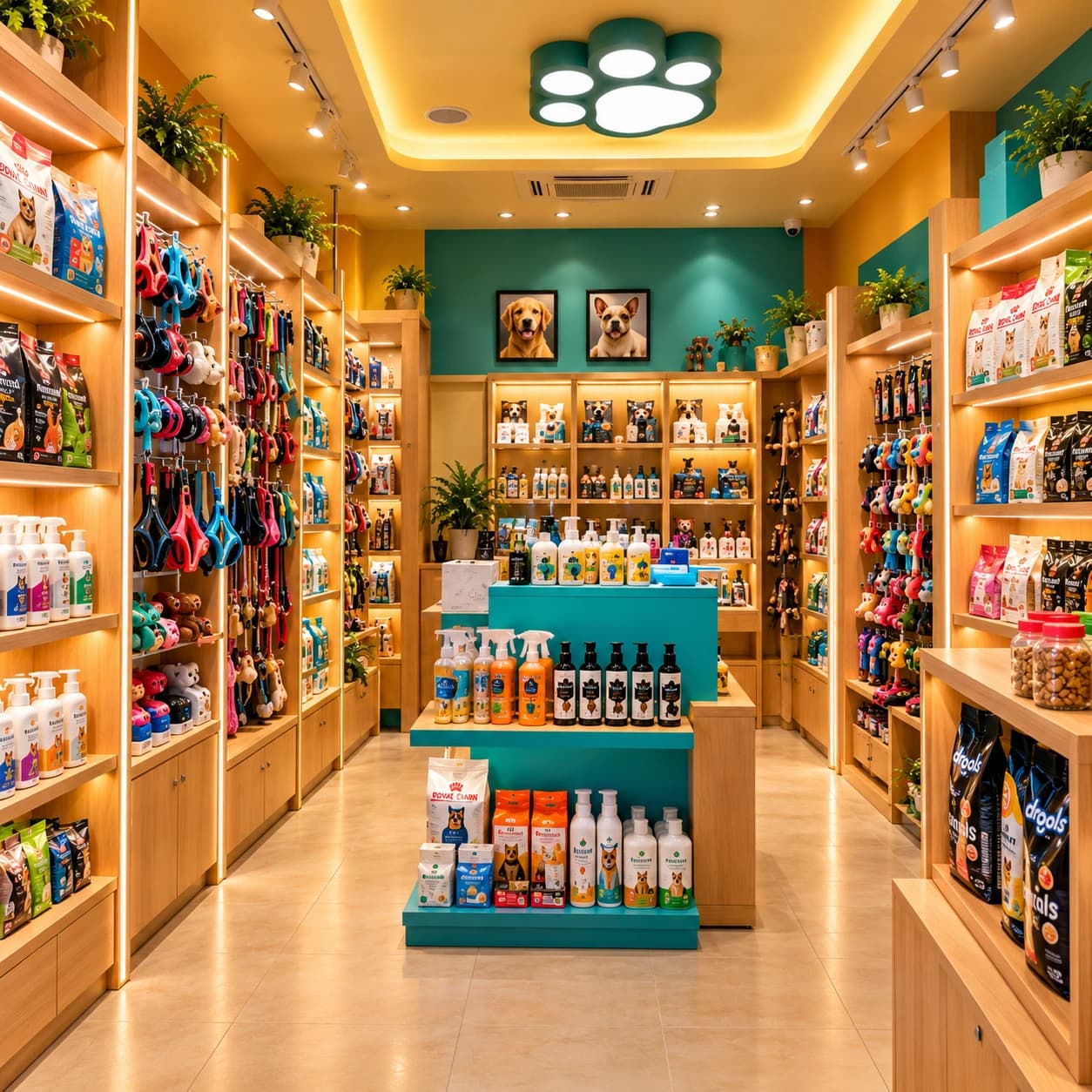
Design for the pet's path, not the photographer's. A cat should not pass through a room full of dogs. A nervous dog should not wait beside a dryer. A retail shelf on the exit path catches the parent after the groom, when the visit is already a success.
Licences and registrations for a pet grooming franchise in India
This is a checklist to take to a local lawyer or chartered accountant, not legal advice. Requirements vary by state, city and the activities you run.
- Business entity: private limited company, LLP or proprietorship, with the liability and tax treatment you intend.
- GST registration once you cross the threshold, with correct invoicing from day one.
- Municipal trade licence or shop licence for the premises.
- Shops and Establishments registration under the applicable state law.
- Fire safety NOC or compliance, depending on the building and local rules.
- Legal Metrology compliance for packaged goods and weighing scales.
- Pet shop registration under the Prevention of Cruelty to Animals (Pet Shop) Rules, 2018, if you sell or trade live pets. The Rules require registration with the State Animal Welfare Board and cover online platforms too.
- FSSAI status for pet food, which is a grey area. Confirm the current position with the local authority before you stock food.
- BIS standard IS 11968:2019 for dog and cat food, where it applies to the products you stock.
- Insurance: public liability, property, stock and, where available, grooming-related liability.
- Waste disposal and sanitation arrangements that meet local requirements.
- Music licence if you play commercial music in the store.
A pet shop franchise that sells live animals faces a different registration path from a grooming and retail store. The 2018 Rules apply to the sale or trade of pet animals, including online platforms. A grooming-only or product-only store does not sell animals, so the registration may not apply. A store that sells puppies or kittens does need it. Confirm your position with the State Animal Welfare Board rather than relying on a secondary summary.
Pet food is the other grey area. The Food Safety and Standards Act, 2006 defines food around human consumption, while several licensing portals list pet food among FSSAI categories. Legal commentary describes the sector as sharing jurisdiction between FSSAI, the Animal Welfare Board, municipalities and other regulators. Ask the local FSSAI office and your chartered accountant to confirm the category for your assortment. Do not assume that a grooming licence covers food retail.
Staffing and training for a pet grooming franchise
A grooming store sells trained time. If the team is thin, the calendar is thin. Most franchise plans list staff as a cost line and stop there. The operating question is how many trained hands you have on a Saturday and how long each groom takes.
- Roles: groomers, grooming assistants, front desk, store manager and cleaner. One person may cover several roles in a small store.
- Training: who trains, for how long, on which breeds and coat types, and how competence is assessed.
- Handling: anxious pets, senior pets, brachycephalic breeds, cats and pets with skin conditions.
- Safety: bite and scratch protocol, incident reporting, first aid, vet escalation and consent forms.
- Retention: pay band, career path, equipment quality, workload and breaks.
- Cover: holiday, sickness and peak-season planning.
Ask the franchisor for the training curriculum and the assessment method, not a brochure line that says full training is provided. Ask whether training happens before opening, during opening or remotely. Ask who pays for refresher training and travel. Ask what happens when a trained groomer leaves.
You do not need to be a groomer to run the store. You do need to protect the standard when the team is under pressure. Pawmiable separates the operating role from the grooming craft for that reason.
Operating metrics for a pet grooming franchise
A franchisee can feel busy and still lose money. Track a small set of numbers every week and compare them with the plan you built before opening.
A weekly operating scorecard
| Metric | How to calculate it | What a weak number tells you |
|---|---|---|
| Grooming slot utilisation | Booked grooming minutes ÷ available grooming minutes | You are paying for capacity you are not selling |
| Average grooming ticket | Grooming revenue ÷ completed grooms | You are underpricing time or missing add-ons |
| Rebooking rate | Clients with a next appointment ÷ completed grooms | The relationship is not becoming a habit |
| No-show rate | Missed appointments ÷ booked appointments | Reminders, deposits or the booking policy need work |
| Retail inventory turns | Cost of goods sold ÷ average inventory | Cash is sitting on the shelf |
| Inventory days | Average inventory ÷ cost of goods sold × 365 | Slow movers or over-ordering |
| Gross margin by service | (Revenue − direct cost) ÷ revenue | A popular service is subsidising the rest |
| Staff cost as % of revenue | Total staff cost ÷ revenue | The roster is ahead of demand |
| Incident rate | Recorded incidents ÷ completed grooms | Handling or equipment needs attention |
| Review response rate | Replies ÷ new reviews | You are not learning from feedback |
Ask a franchisor to show these numbers at the unit level, with the assumptions behind them. If they can only show brand-level averages, you are looking at marketing, not a business model.
Pricing that protects the service
Quote after a coat and skin assessment, before the bath starts. Price the time the groom takes, not the breed name alone. Charge for de-matting, medicated baths and handling that takes longer. A discount that fills a slot at the wrong price trains the customer to wait for the next discount.
Inventory that does not eat your cash
A curated shelf is not a warehouse. Choose an assortment that turns, set reorder points, check expiry and review slow movers monthly. Ask who carries the markdown risk and whether the franchisor accepts returns. Retail can lift a grooming visit. It can also hide a cash problem behind full shelves.
Customer experience that earns the second visit
The first visit sets the habit. Confirm the appointment, explain the assessment, show the parent where to watch, send a clear update if the groom changes, and follow up after the visit. A good groom is a result. A good first visit is a reason to come back.
Risks of a pet grooming franchise and how to reduce them
Every franchise carries risks that the brand cannot remove. Name them before you sign.
Franchise risk register
| Risk | How it shows up | Mitigation |
|---|---|---|
| Demand risk | Empty slots after the opening month | Test the catchment before signing; build a local marketing plan |
| Lease risk | Rent escalates faster than revenue | Cap escalation, negotiate a fit-out period, model a downside case |
| Staff attrition | Trained groomers leave and bookings slip | Pay fairly, train continuously, keep a bench of assistants |
| Injury and liability | A bite, a scratch or a burn becomes a claim | Consent forms, incident logs, insurance and vet relationships |
| Regulatory risk | A licence category changes or an inspection finds a gap | Keep registrations current; ask a local lawyer to review |
| Inventory obsolescence | Slow stock and expiry eat working capital | Curate the range, set reorder points, review monthly |
| Brand dependence | The franchisor changes fees, supply or support | Read the agreement; understand renewal, termination and supply terms |
| Territory ambiguity | A second store opens closer than expected | Get territory terms in writing and verify enforcement |
| Cost inflation | Rent, wages, power and stock rise together | Build a downside model and a pricing review cadence |
| Projection risk | The plan assumes a ramp that never arrives | Use a conservative case; keep a working capital buffer |
Pawmiable does not guarantee sales, profit, break-even or capital recovery. Any projection is prepared for a specific site after the location and store plan are validated. Actual results can differ, and the business may not recover its capital. Ask every franchisor for the same clarity in writing.
How to judge a pet franchise partner
A franchise partner is easier to judge when you separate what you can verify from what you are being sold. Use the same criteria for every opportunity you consider, including ours.
What to check and what to ask for
| What to check | What good looks like | What to ask for |
|---|---|---|
| Unit economics | The franchisor can explain revenue, cost and margin at the store level, with assumptions | A sample unit model and the assumptions behind it |
| Territory | The territory is defined in writing and the franchisor explains how it is enforced | The territory clause and a map or pin-code schedule |
| Training | A curriculum, an assessment and refresher training | The training plan, duration and who delivers it |
| Supply | Approved assortment, pricing, returns and continuity | The supply agreement and current price list |
| Technology | The systems you must use, the recurring cost and who owns the data | The technology terms and data ownership clause |
| Support | The scope, response times and who pays for what | A written support schedule |
| References | Access to current and former franchisees | Three to five references, including one who left |
| Exit | Renewal, transfer, termination and de-branding are clear | The relevant clauses and the exit process |
| Proof | The franchisor separates company claims from verified performance | The evidence behind each claim |
A franchisor who cannot answer these questions in writing is asking you to carry the uncertainty. That is a business risk, not a personality test. The next section turns the criteria into specific questions.
Questions to ask a franchisor before you sign
Take these questions to the first serious conversation and ask for written answers. A franchisor who resists written answers is telling you something.
Money and terms
- What is the total franchise fee, and what exactly does it cover?
- Is the fee refundable if I do not open, or if the site is rejected?
- Is GST extra on the fee, the fit-out and the supply?
- What royalty or marketing contribution applies, and on which revenue base?
- When does the royalty start: at signing, at opening or after a grace period?
- Does the franchisor earn a margin on fit-out, equipment, inventory or supply?
- What is the minimum purchase or minimum stock requirement?
- What working capital does the franchisor assume, and for how many months?
- Which costs are mine and which are shared with the franchisor?
- What happens to my investment if I terminate early?
Territory and location
- What territory do I get, and is it exclusive in writing?
- How is the territory measured: radius, pin codes, drive time or population?
- Who approves the site, and against which criteria?
- What happens if the franchisor later opens a company store or another franchise nearby?
- Who signs the lease: me or the franchisor?
- What support do I get with site surveys, permits and fit-out?
Operations and people
- Who trains my team, for how long, and how is competence assessed?
- What happens when a trained groomer leaves?
- How many groomers and assistants does the model assume at maturity?
- What are the service standards, and who audits them?
- What technology do I have to use, and what does it cost?
- Who owns the customer data and the booking history?
- What is the incident and complaint escalation process?
- Can I stock products or offer services the franchisor does not approve?
Exit and disputes
- What is the initial term, and how is renewal decided?
- What is the minimum operating lock-in?
- Can I sell the business or transfer the franchise? On what terms?
- Does the franchisor have a right of first refusal?
- What is the exit process, and what happens to the brand signage and stock?
- Which courts or arbitration seats handle disputes?
Due diligence and a 90-day evaluation plan
Documents to request
- The draft franchise agreement, including all annexures and schedules.
- The current franchise information memorandum or disclosure document.
- The itemised fit-out bill of quantities and the design scope.
- The equipment list, specifications, warranty and replacement cycle.
- The supply agreement, price list, minimum order and return policy.
- The training curriculum, assessment method and refresher terms.
- The operations manual or a summary of the standards you must follow.
- The technology terms, data ownership and recurring fees.
- The territory definition and any exclusivity language.
- The marketing fund terms and the spend reporting.
- The insurance requirements and indemnity clauses.
- Three to five franchisee references, including one who left the system.
India does not mandate a United States-style franchise disclosure document. The agreement is the contract, and the quality of disclosure depends on the franchisor. Ask a franchise lawyer to read the documents before you pay a deposit. Ask a chartered accountant to test the assumptions in the plan.
A 90-day plan
- Weeks 1 and 2: define your budget, operating role and city. Shortlist three franchise models, not ten.
- Weeks 3 and 4: request the documents and the fee breakdown from each shortlisted franchisor. Compare on the same cost lines.
- Weeks 5 and 6: visit two operating stores, ideally on a weekday and a weekend. Watch the reception, the grooming floor and the retail shelf.
- Weeks 7 and 8: speak to franchisees, including one who has left. Ask about support, supply, staffing and disputes.
- Weeks 9 and 10: test two or three sites against the catchment method in this guide. Get lease terms in writing.
- Weeks 11 and 12: build a downside case, complete legal and tax review, and decide whether to proceed. Do not pay a deposit before this step.
If the franchisor cannot provide the documents or the references, pause. A deposit paid before due diligence is a deposit you may not recover.
Is a pet franchise right for you?
A pet grooming franchise is an operating business. It needs capital, suitable premises and someone ready to manage a local team and a customer relationship. It is not a passive investment.
A good fit
- You want an operating business, not a silent investment.
- You are ready to lead a small team and hold the service standard.
- You can commit to a premises lease that supports the store's five-year horizon.
- You are ready to be visible in the local market.
- You can arrange the capital for the store build and the first months of operation.
Probably not the right fit
- You want a hands-off investment with no operating role.
- You want to set your own brand or service standards.
- You need a guaranteed return before you start.
- You are not ready to hire, train and manage people.
You do not need to be a groomer. You do need to lead the team, hold the standard and be present in the neighbourhood. If you want a hands-off investment with a guaranteed return, this model will disappoint you.
The Pawmiable franchise model
Pawmiable began with three dogs, Bingo, Bunny and Zuko, and a question: would we give this to them? The original studio is at Conscient One Mall, Sector 109, Gurugram. It is rated 4.9 from 150+ Google reviews, with 500+ pet parents served. Those figures describe the original studio, not franchise-network performance.
The model is built on two recurring relationships: the groom and the shelf. Grooming creates the reason to return. Curated retail gives the same visit another reason. The franchisee owns the store, employs the local team and owns the customer relationship. Pawmiable holds the brand standard and the support framework. Specialist partners handle design, staffing, technology and supply under their own agreements.
The division of responsibility
| Pawmiable provides | You own and operate |
|---|---|
| Brand standards and the customer promise | The store, its lease and its local reputation |
| Grooming SOPs, training and launch preparation | The local team, hiring and daily operations |
| Approved retail assortment and supply coordination | Store inventory and local economics |
| Store design and fit-out coordination through Mindcoder Technologies | The customer relationship and service standard |
| Staffing and payroll support through Defitex, under separate terms | Local marketing execution and community relationships |
| Technology through Yggdra via Kwasiq Networks | The profit and loss, working capital and operating risk |
The process runs in six stages: introductory conversation; qualification and location shortlist; property survey and store design; site-specific plan; agreements; and build, hire and launch. Each stage has an output, so you can decide whether to continue before the next commitment. No commitment is required before the location and store plan are clear.
Support is grouped into three areas. The first covers brand, training and customer experience. The second covers technology, store and supply. The third covers people, marketing and local operations. The scope of each is set out in the franchise and specialist service agreements, not left to a brochure.
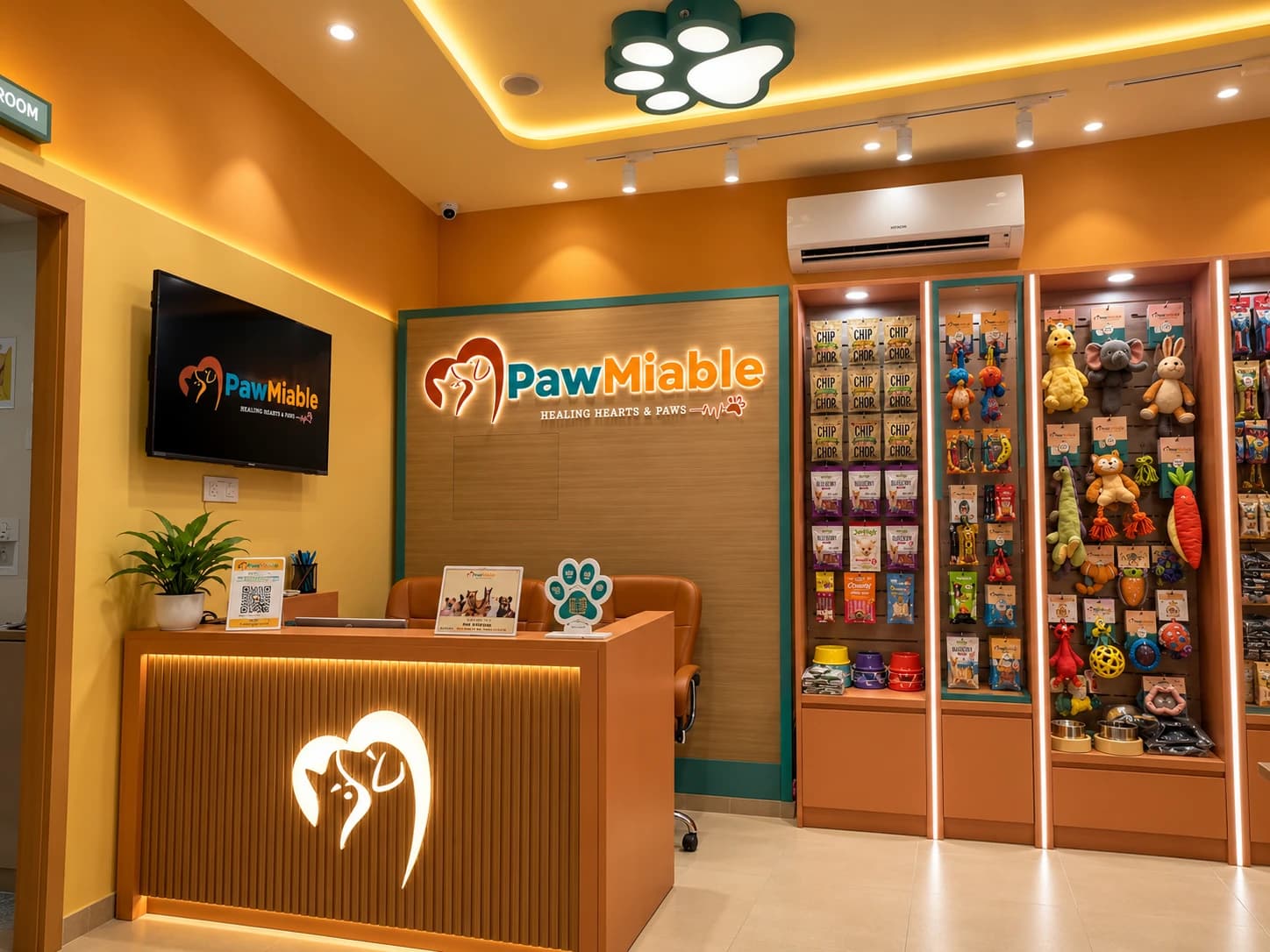
What we do not claim: Pawmiable does not guarantee sales, profit, break-even or capital recovery. Any projection is prepared for a specific site after the location and store plan are validated. Actual results can differ, and the business may not recover its capital. We also do not present the original studio's Google rating as franchise-network performance.
If you want a franchise-owned, franchise-operated store with a grooming anchor, a curated retail shelf and a defined support framework, start with the franchise page. The first step is a conversation, not a commitment.
Frequently asked questions
What is a pet grooming franchise?
A pet grooming franchise is a branded grooming business run by a franchisee under a franchisor's standards. The franchisee usually owns the store, employs the team and carries the lease and working capital. The franchisor provides the brand, training, operating standards, supply and support defined in the agreement.
How much does a pet grooming franchise cost in India?
Publicly quoted starting costs range from about ₹8 lakh to ₹50 lakh or more. A small service-led format sits at the lower end. A premium store with full fit-out, equipment, opening stock, lease deposit and working capital sits at the upper end. The total depends on the city, store size and scope. Ask for an itemised budget with exclusions.
Is a pet store franchise profitable?
Profit depends on the site, rent, staffing, pricing, service mix and how much capital the owner puts in. No franchisor can guarantee profit, break-even or capital recovery. Ask for unit-level numbers with assumptions, speak to franchisees, and build a downside case before you commit.
Do I need grooming experience to own a pet grooming franchise?
Usually not. You need to run the business, lead the team and hold the service standard. The franchisor should provide training and operating systems. Grooming experience helps you judge quality, but it does not replace site selection, staffing and financial discipline.
What is the difference between a pet grooming franchise and a pet store franchise?
A grooming franchise sells appointments and skilled time. A pet store franchise sells products and inventory. Many stores combine both. The economics differ: grooming is capacity-constrained, while retail is cash and inventory-constrained. Ask which side drives the unit economics.
Which franchise model is best in India?
There is no single best model. FOFO gives you control and full operating risk. FOCO reduces operating involvement but limits control. A master franchise is a different business with sub-franchisee management. Mobile and shop-in-shop formats suit different catchments. Match the model to your capital, operating role and site.
How much space does a pet grooming franchise need?
Around 1,000 sq ft of super area is a common benchmark. A smaller service-led format can work in 500 to 1,000 sq ft. A store with deeper retail and separate cat handling may need 800 to 1,200 sq ft or more. Pawmiable uses about 1,000 sq ft as a search benchmark and verifies actual carpet area from drawings.
What licences does a pet grooming or pet store franchise need in India?
Common requirements include a business entity, GST registration, a municipal trade licence, Shops and Establishments registration, fire compliance, Legal Metrology compliance and insurance. If you sell or trade live pets, the Prevention of Cruelty to Animals (Pet Shop) Rules, 2018 require registration with the State Animal Welfare Board. FSSAI treatment of pet food is a grey area; confirm it locally.
Do I need FSSAI registration to sell pet food?
The position is not clear-cut. The Food Safety and Standards Act, 2006 defines food around human consumption, while some licensing portals list pet food among FSSAI categories. Legal commentary describes overlapping jurisdiction. Ask the local FSSAI office and your chartered accountant to confirm the category for the products you plan to stock.
Do I need pet shop registration if I only groom pets?
The Prevention of Cruelty to Animals (Pet Shop) Rules, 2018 apply to the sale or trade of pet animals, including online platforms. A grooming-only or product-only store does not sell animals, so the registration may not apply. A store that sells puppies or kittens does need it. Confirm with your State Animal Welfare Board.
How long does it take to open a pet grooming franchise?
It depends on the property, lease, approvals, fit-out and hiring. Pawmiable runs a six-stage process from introductory conversation to opening and does not promise a fixed date before the site is surveyed. Ask any franchisor for the critical path and the assumptions behind their timeline.
Is territory protection guaranteed?
Only if the agreement says so. Ask how the territory is defined, whether it is exclusive, and what happens if the franchisor opens another store nearby. Get the answer in the signed documents. A verbal assurance is not a territory right.
What should I ask a franchisor before signing?
Ask for the total fee and what it covers, the royalty base, the territory definition, the training curriculum, the support model, the supply terms, the technology costs, the exit process and the dispute forum. Ask for three to five franchisee references, including one who left. Request written answers.
Can I run a pet grooming franchise as a silent investment?
A silent investment is a poor fit for most grooming franchises. The business needs someone to lead the local team, hold the service standard and manage the customer relationship. Some models allow a hired store manager, but the franchisee still owns the operating risk. Ask the franchisor what involvement they require.
Does Pawmiable guarantee returns?
No. Pawmiable does not guarantee sales, profit, break-even or capital recovery. Any projection is prepared for a specific site after the location and store plan are validated. Actual results can differ, and the business may not recover its capital.
Sources and further reading
Research and regulatory sources
- Grand View Research: India pet grooming services market outlook
- Research and Markets: India pet grooming products market
- IMARC: India pet care products market
- Animal Welfare Board of India: Prevention of Cruelty to Animals (Pet Shop) Rules, 2018
- Cyril Amarchand Mangaldas: India's pet care sector and regulatory grey areas
- Food Research Lab: pet food registration and IS 11968:2019 in India
Related guides
Written by Abhishek & Sheetal
Founders, Pawmiable. Grooming real pets every day at Conscient One Mall, Sector 109.

